
Table of Contents
- What Is Fish Leather and How It's Made
- Fish Leather Wallet Durability: What You Need to Know
- Fish Leather vs Cowhide Wallet: A Direct Comparison
- Real-World Performance: Water, Sweat, and Daily Wear
- How to Care for a Fish Leather Wallet
- How Long Do Leather Wallets Last: Fish Leather Edition
- Is Fish Leather Good for Wallets? The Verdict
- Frequently Asked Questions
Last Updated: October 14, 2026
What Is Fish Leather and How It's Made
Fish leather is a natural material made from the skin of fish species like salmon, cod, and wolffish. The tanning process converts raw fish skin into a durable, flexible leather that retains the distinctive scale pattern of the original fish. At Fiskur Leather, we use traditional tanning methods to create leather that's both beautiful and functional.
The process begins with cleaning and preparing the fish skin. The skin is then treated with tanning agents that preserve the material and enhance its strength. The result is a lightweight material with natural texture that cannot be replicated in synthetic alternatives.
Fish species vary in their leather qualities. Salmon leather is smooth and refined. Each species brings unique visual characteristics to the final product. The scale pattern remains visible, creating a distinctive aesthetic that appeals to those seeking something truly unique.

The thickness of fish leather typically ranges from 0.6mm, making it thinner than traditional cowhide but still remarkably durable. This thinness is actually an advantage for wallets, as it keeps the finished product lightweight and compact. The flexibility of fish leather means it molds to your pocket over time, becoming more comfortable with use.
Fish Leather Wallet Durability: What You Need to Know
Is fish leather good for wallets when it comes to durability? Yes, when sourced and constructed properly, fish leather wallets can last for many years of daily use. The key factor is understanding how fish leather behaves under stress compared to other materials.
Fish leather has natural strength that surprises many first-time users. The protein structure of fish skin creates a material that resists tearing and puncturing (Superior Damage Tolerance of Fish Skins). Hand-stitched construction amplifies this durability. When a wallet is sewn with quality thread, each stitch reinforces the leather rather than weakening it.
Common concerns about fish leather durability often stem from misinformation. Many assume that because fish leather is thinner than cowhide, it must be weaker. In practice, thinness and weakness are not the same thing.
The durability also depends on wallet construction:
- Card slot design: Wallets with reinforced card slots prevent stretching over time
- Stitching pattern: Double stitching or cross-stitching adds strength at stress points
- Leather orientation: How the fish skin is cut and oriented affects how it handles repeated folding
- Backing material: Some wallets combine fish leather with kangaroo leather for additional strength
Fiskur Leather's bifold and trifold wallets combine fish leather with kangaroo to create what we call "fiskuroo", a blend of the world's strongest leathers. This construction approach directly addresses durability concerns by pairing fish leather's unique aesthetic with kangaroo's proven toughness.
The real test of durability is time in a pocket. Fish leather wallets that are properly cared for develop a patina over months and years, becoming richer in color and more supple. This is not deterioration, it's the leather aging gracefully.
Fish Leather vs Cowhide Wallet: A Direct Comparison
When comparing fish leather to traditional cowhide for wallets, several key differences emerge. Neither material is universally "better", the choice depends on your priorities and how you use your wallet.
| Characteristic | Fish Leather | Cowhide |
|---|---|---|
| Weight | Lightweight (0.6-1.2mm) | Heavier (1.2-2.0mm) |
| Thickness | Thin, flexible | Thicker, stiffer |
| Break-in period | Minimal (adapts quickly) | Extended (weeks to months) |
| Visual texture | Distinctive scales | Uniform grain |
| Water resistance | Good when treated | Variable by tanning |
| Price point | Varies by species | Generally lower |
| Patina development | Darkens, becomes supple | Develops rich patina |
| Availability | Limited, specialty | Widely available |
Cowhide has one significant advantage: availability and familiarity. Most leather goods manufacturers use cowhide because the supply is consistent and the material behaves predictably. For wallets, this means more options at lower price points.
Fish leather's advantages center on uniqueness and performance. A salmon leather wallet stands out visually. The distinctive scale pattern cannot be mimicked. For everyday carry, the lightweight construction means less bulk in your pocket. The material also requires less break-in time than cowhide, it's comfortable from day one.
The durability comparison is nuanced. Cowhide can be incredibly durable if properly tanned and constructed. Fish leather is equally durable when sourced from quality species and hand-stitched with care. The difference lies in how each material ages. Cowhide develops a rich patina over years. Fish leather darkens and becomes more supple, creating a different but equally beautiful aging process.
Cost varies significantly. Basic cowhide wallets start cheaper. Premium fish leather wallets, especially those hand-stitched with exotic species, command higher prices. This reflects both the material scarcity and the craftsmanship required.
Real-World Performance: Water, Sweat, and Daily Wear
How does fish leather actually perform when exposed to moisture, body sweat, and the friction of daily pocket carry? This is where theory meets reality.
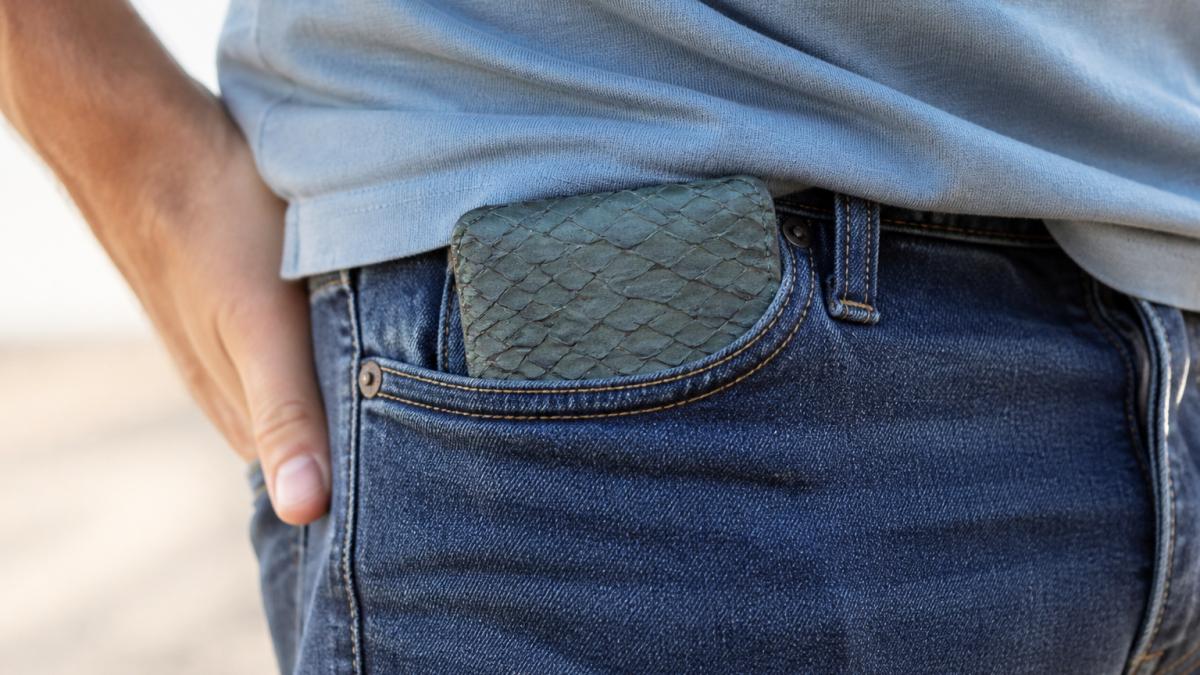
Fish leather has inherent water resistance. The scale structure of the fish skin naturally sheds water rather than absorbing it. When treated with quality tanning agents, fish leather becomes even more resistant to moisture penetration.
Sweat exposure is a real concern for any wallet material. Fish leather handles sweat better than untreated cowhide because of its natural water-shedding properties. However, prolonged exposure to salt sweat can cause discoloration if the leather is not treated. Fiskur Leather uses water-repellent finishes on premium pieces like our Nanai Premium salmon leather wallets.
Daily wear testing reveals that fish leather holds up remarkably well. The flexibility means the wallet adapts to your pocket shape rather than resisting it. Over months of use, the leather develops micro-scratches that are barely visible and actually enhance the aesthetic character.
One practical consideration: fish leather can develop a slight odor if exposed to sustained moisture without drying. This is not unique to fish leather, it's common to all natural leather. The solution is simple: allow your wallet to air dry if it gets wet, and avoid storing it in damp environments.
The scale pattern actually provides a functional advantage during daily wear. The textured surface grips better than smooth leather, reducing the chance of the wallet slipping out of your pocket.
How to Care for a Fish Leather Wallet
Proper care extends the life of any leather wallet, and fish leather is no exception.
Basic care is straightforward:
- Keep it dry: Allow your wallet to air dry if it gets wet. Do not use heat sources like hair dryers.
- Avoid prolonged moisture: While fish leather resists water, extended submersion is not recommended.
- Clean gently: Use a soft, dry cloth to wipe away dust and debris. For stubborn marks, a slightly damp cloth works.
- Condition occasionally: A light leather conditioner applied every 6-12 months keeps the material supple. Use sparingly, fish leather needs less conditioning than cowhide.
- Store properly: Keep your wallet in a cool, dry place. Avoid plastic bags, which trap moisture.
Fish leather can be repaired if damaged. Small tears can be stitched closed by a leather craftsperson. Deep scuffs and scratches are harder to repair but add character to the piece.
The scale pattern can accumulate dirt in the crevices. A soft brush or old toothbrush gently applied removes dust without damaging the leather. This is optional maintenance, the scales are part of the aesthetic appeal even when they show some patina.
If you condition your wallet, use a product formulated for delicate or thin leathers.
How Long Do Leather Wallets Last: Fish Leather Edition
The lifespan of a fish leather wallet depends on construction quality, leather sourcing, and how you use it. A well-made fish leather wallet can last 5-10 years or longer with proper care.
Quality indicators that predict longevity include:
- Hand-stitching: Machine-stitched wallets fail at seams faster than hand-stitched ones. Hand stitching allows for thread tension adjustment and repair.
- Thread quality: Ritza Tiger thread from Germany is a benchmark. It resists breakage and maintains integrity through thousands of flexes.
- Leather sourcing: Premium species like Nanai salmon leather are thicker and more durable than standard salmon. Wolffish leather is naturally thicker and lasts longer.
- Backing material: Wallets backed with kangaroo leather (fiskuroo construction) last significantly longer because the backing prevents stretching of the card slots.
- Design simplicity: Minimalist wallets with fewer moving parts last longer than complex designs with multiple pockets.
A Fiskur Leather minimalist wallet, hand-stitched and made from quality salmon leather, is guaranteed to last many years. Our bifold and trifold wallets with fiskuroo construction often exceed 10 years because the kangaroo backing prevents the common failure point of card slot stretching.

The aging process is part of longevity. As fish leather darkens and becomes more supple, it actually becomes more durable, not less.
Factors that shorten wallet lifespan include overstuffing (too many cards or cash), storing in damp environments, and exposure to extreme heat. A wallet kept in a hot car glove box will age faster than one stored at room temperature.
Is Fish Leather Good for Wallets? The Verdict
Is fish leather good for wallets? The answer is yes, with important caveats about sourcing, construction, and your specific needs.
Fish leather excels for users who prioritize uniqueness, lightweight design, and natural water resistance. The distinctive scale pattern creates a wallet that stands out. The material is comfortable from day one, requires minimal break-in, and develops character over time. For everyday carry, the thinness is an advantage, not a weakness.
Fish leather is less ideal if you need maximum durability in extreme conditions. While fish leather is durable, cowhide may be the better choice if your wallet will face harsh environments, constant moisture, or extreme stress.
The real differentiator is construction. A poorly made fish leather wallet will disappoint. A well-crafted piece from a maker like Fiskur Leather, hand-stitched with quality thread and premium species, will outlast many cowhide wallets.
For most users seeking a quality wallet that combines durability with aesthetic uniqueness, fish leather is an excellent choice. The material delivers on its promises when sourced properly and cared for reasonably. The question is not whether fish leather works, it does. The question is whether the unique properties of fish leather align with your priorities and wallet use.
If you're ready to experience fish leather firsthand, Fiskur Leather offers several options. Our Fish100 Minimalist Wallet ($32.00) is an ideal entry point, hand-stitched from quality salmon leather. For those seeking maximum durability, our Fiskuroo bifold and trifold wallets ($98.00) combine fish leather with kangaroo backing to create a wallet built to last. Custom orders are welcome if you want a specific species or color. Explore our collection and discover why fish leather wallets have become the choice for those who value craftsmanship and sustainability.

Frequently Asked Questions
How long does fish leather last compared to traditional leather?
Fish leather wallets are designed to last many years with proper care. The durability depends on the fish species and construction method. Hand-stitched wallets with reinforced threading tend to outlast machine-made alternatives. Unlike some synthetic materials, fish leather develops character over time rather than degrading, making it suitable for everyday carry and daily use without premature wear.
Is fish leather actually waterproof or water-resistant?
Fish leather offers natural water resistance due to its scale structure, though it is not fully waterproof. Some premium fish leathers, like Nanai Premium salmon leather from Germany, include water-repellant treatments. Exposure to saltwater or prolonged moisture can damage the wallet over time.
How do you clean and maintain a fish leather wallet?
Clean your fish leather wallet with a soft, dry cloth to remove dust and debris. For stains, use a slightly damp cloth with mild soap, then dry immediately. Avoid prolonged moisture exposure and keep the wallet away from direct heat sources. Periodically condition the leather. Store in a cool, dry place. Regular maintenance prevents scale damage and extends the wallet's lifespan significantly.
Why is fish leather more expensive than cowhide wallets?
Fish leather commands higher prices due to limited sourcing, specialized tanning techniques, and handcrafted construction. Fish species like salmon and wolffish produce smaller hides than cattle. Hand-stitching with quality thread like Ritza Tiger adds labor costs. The exotic nature, distinctive appearance, and sustainability appeal also justify premium pricing compared to mass-produced cowhide alternatives.
Leave a comment