Table of Contents
- Sustainable Fashion Materials for 2026: What's Changing
- Natural Fibers: Organic Cotton, Hemp, Flax, and Beyond
- Recycled Fibers: Closing the Loop
- Eco-Friendly Fabrics 2026: Innovations and Trade-Offs
- Sustainable Leather Alternatives: Including Fish Leather
- How to Verify Sustainable Fashion Claims
- Choosing Materials by Garment Use and Durability
- Frequently Asked Questions
Last Updated: October 11, 2026
Sustainable Fashion Materials for 2026: What's Changing
The fashion industry is at an inflection point. At Fiskur Leather, we've spent years sourcing and working with materials that balance durability, ethics, and environmental responsibility.
The shift toward sustainable fashion materials isn't just a trend anymore. Brands that can't prove their material sourcing and environmental claims are losing customers to those that can. But here's where it gets tricky: not all sustainable materials are created equal.
Natural Fibers: Organic Cotton, Hemp, Flax, and Beyond
Natural fibers have dominated sustainable fashion conversations for years, and for good reason. They're biodegradable, renewable, and can be grown without synthetic pesticides. But "natural" doesn't automatically mean sustainable, the growing practices, water usage, and chemical processing all matter.
Organic Cotton and Regenerative Practices
Organic cotton eliminates synthetic pesticides and fertilizers, which reduces environmental harm during cultivation. The fiber itself is soft, breathable, and works well for everyday apparel. But organic cotton still demands significant water, roughly 700 gallons per shirt in conventional growing regions.
Regenerative organic cotton is becoming more common, though certification remains fragmented. When you see this label, it means the farm is actively improving soil carbon and biodiversity alongside avoiding synthetic inputs.
Hemp and Flax: Fast-Growing Alternatives
Hemp grows quickly, requires minimal pesticides, and uses far less water than cotton. It's naturally strong and becomes softer with wear. Flax works similarly and produces linen, a fabric prized for its durability and breathability.
The challenge with hemp and flax is processing. Converting raw fiber into usable fabric requires significant chemical inputs, especially if the goal is a soft hand-feel.
Emerging Plant-Based Fibers: Pineapple-Leaf and Banana
Pineapple-leaf fiber (Piñatex) and banana fiber represent a different approach: using agricultural byproducts that would otherwise be discarded. Pineapple farmers already grow the fruit; capturing the leaves adds minimal environmental burden and provides additional farm income.
These fibers are strong, flexible, and genuinely innovative. They've gained traction in accessories and footwear. The limitation is scale and consistency. Production remains small relative to conventional fibers, and quality can vary batch to batch.
Recycled Fibers: Closing the Loop
Recycled materials close the loop on textile waste, but the process isn't as simple as collecting old clothes and spinning them into new fabric. Understanding how recycled fibers actually work reveals both their potential and their limits.
Recycled Polyester and Cotton
Recycled polyester is made by breaking down existing synthetic fabrics and re-spinning them into new fiber. It uses significantly less energy than virgin polyester production and diverts material from landfills.
The catch: recycled fibers degrade with each cycle. Recycled polyester loses strength and durability compared to virgin polyester. Recycled cotton fibers become shorter and weaker, so they're often blended with virgin fibers to maintain usability.
Post-Consumer Materials and Circular Fashion
Post-consumer recycled (PCR) materials come from garments people actually wore and discarded, not factory scraps. This is genuinely circular, it closes the loop on consumer waste. But collecting, sorting, and processing post-consumer textiles is expensive and logistically complex.
Circular fashion goes beyond recycling. It includes resale platforms, rental models, and design for durability and repairability. A garment designed to last 10 years and be repaired when damaged is more sustainable than a disposable piece made from recycled fiber.
Eco-Friendly Fabrics 2026: Innovations and Trade-Offs
Innovation in sustainable fashion materials heading into 2026 is accelerating, but new doesn't always mean better. Lab-grown fibers, regenerated cellulose, and bio-based synthetics all offer promise, and all come with trade-offs.
Microfiber Shedding and Textile Pollution
Microfiber shedding is one of the most overlooked sustainability issues. Synthetic fabrics shed microscopic plastic fibers during washing, which end up in waterways and eventually in marine ecosystems.
The scale of microfiber pollution is significant. A single synthetic garment can shed millions of fibers per wash cycle.
Minimizing microfiber shedding means washing synthetic garments less frequently, using cold water, and choosing fabrics with tighter weaves. Natural fiber blends that reduce synthetic content also help.
Dyes, Finishes, and Garment Construction Impact
The fiber itself is only part of the sustainability equation. Dyeing and finishing processes consume enormous amounts of water and chemicals. Conventional synthetic dyes require heavy metal mordants and generate toxic wastewater.
Water-based finishes that reduce wrinkles or add stain resistance often contain microplastics or problematic chemicals. Quality construction, reinforced seams, durable zippers, and thoughtful design, extends garment life and reduces replacement frequency.
Sustainable Leather Alternatives: Including Fish Leather
The leather industry has significant environmental impacts: cattle ranching drives deforestation, tanning requires toxic chemicals, and conventional leather production generates substantial waste. Alternatives range from plant-based materials to lab-grown options to byproduct-based leathers.
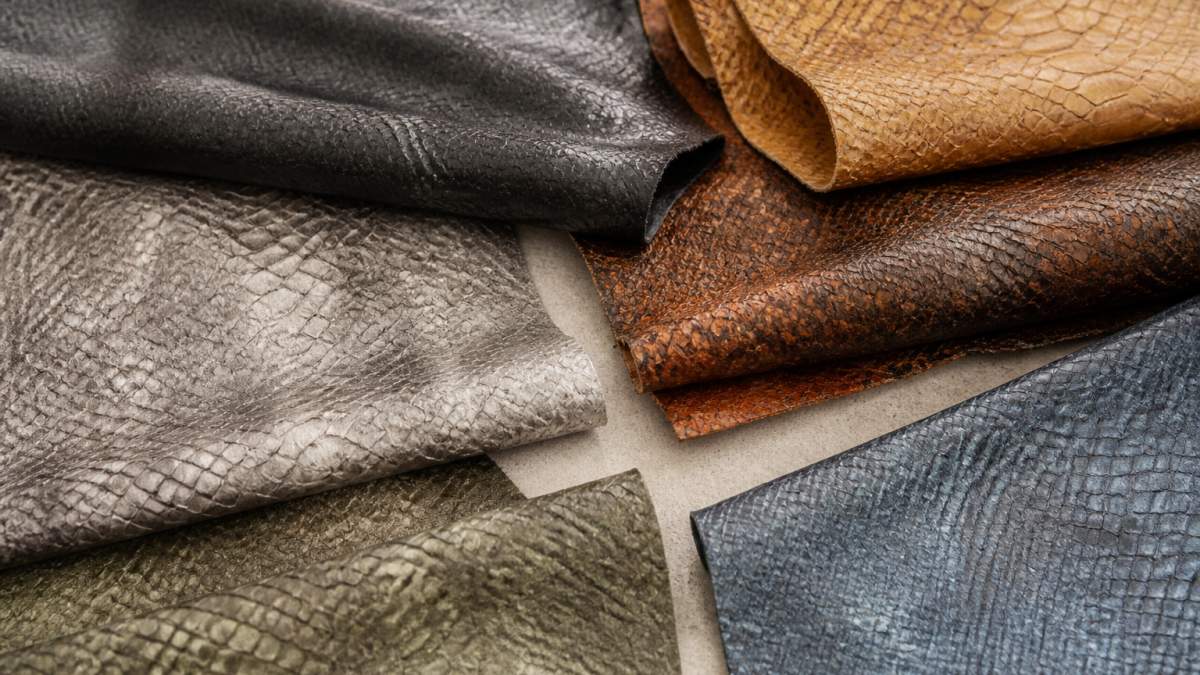
Fish Leather Sustainability: A Byproduct Advantage
Fish leather represents a genuinely different approach.
The sustainability advantage is straightforward: fish leather uses a byproduct that already exists. No additional animals are raised for leather production.
At Fiskur Leather, we use traditional tanning methods, oak gallnut extract, tara bark, and willow bark. Our Lunker Leather collection showcases this approach, offering professional-grade fish leather in multiple species and finishes.

Fish leather does have limitations. It's thinner than traditional leather, so it's better suited for accessories like wallets and bags than for heavy-duty applications.
The real advantage of fish leather is transparency. Because it's a byproduct material, traceability is straightforward.
How to Verify Sustainable Fashion Claims
Greenwashing is rampant in fashion. Brands make vague sustainability claims without backing them up. Learning to verify claims separates genuine sustainable fashion materials expected in 2026 from marketing.
Understanding Certifications and Traceability
Certifications provide a framework for verification, but not all certifications are equally rigorous. GOTS (Global Organic Textile Standard) for organic cotton is well-established and verifiable.
The limitation of certifications is that they focus on specific aspects of production, organic growing, labor practices, chemical safety, but don't necessarily address the full lifecycle impact.
Traceability is more valuable than any single certification. Can you trace the material back to its source? Do the tanning facilities have environmental permits?
Spotting Greenwashing in Sustainability Claims
Red flags include:
- Vague language: "eco-friendly," "sustainable," "natural" without specific backing
- Unverifiable claims: "100% sustainable" is impossible; sustainability is always relative
- Missing information: No details on sourcing, processing, or certifications
- Single-material focus: Claiming a garment is sustainable because of one material while ignoring dyeing, finishing, and construction
Green flags include:
- Specific material sourcing with named suppliers
- Third-party certifications with verifiable standards
- Transparent information on processing and environmental impacts
- Acknowledgment of trade-offs ("This material uses less water but requires more processing")
Choosing Materials by Garment Use and Durability
The most sustainable garment is the one you already own. The second most sustainable is one you'll wear for years. Material choice should align with intended use and your commitment to keeping the piece.
Prioritizing Quality Construction and Repeat Wear
A poorly made piece from "sustainable" materials that you wear twice before discarding has a worse environmental footprint than a well-made conventional piece you wear for a decade.
Quality construction includes:
- Reinforced seams that won't split
- Durable zippers and hardware that won't fail
- Fabric weight appropriate for the garment's purpose
- Design that doesn't go out of style quickly
Repeat wear extends garment life. Washing less frequently, air-drying, and proper storage all reduce degradation. A synthetic garment worn 200 times has a lower per-wear impact than a natural-fiber garment worn 20 times.
Building a Capsule Wardrobe with Sustainable Materials
A capsule wardrobe, a small collection of versatile pieces that mix and match, reduces the total number of garments you need.
When building a capsule wardrobe with sustainable materials for 2026, prioritize:
- Neutral colors that work across seasons and styles
- Classic cuts that won't feel dated in two years
- Pieces that layer well together
- Quality construction from brands with transparent sourcing
Making informed choices about sustainable fashion materials as we approach 2026 means looking beyond marketing language to understand actual environmental impacts, trade-offs, and durability.
At Fiskur Leather, we've built our approach around materials that tell a story, fish leather that transforms a fishery byproduct into handcrafted accessories, traditional tanning methods that avoid toxic chemicals, and custom-made pieces designed to last. Our Salmon Leather collection offers thin, flexible, and very strong material.

Sustainable fashion starts with choosing materials you understand, pieces built to last, and brands willing to prove their claims.
Frequently Asked Questions
What are the most sustainable fashion materials for 2026?
The most sustainable fashion materials in 2026 include organic cotton (grown without synthetic pesticides), hemp and flax (fast-growing crops requiring minimal inputs), recycled polyester and cotton (closing the loop on textile waste), and emerging plant-based fibers like pineapple-leaf and banana fiber. Each has trade-offs: organic cotton uses less pesticide but more water; hemp grows quickly but requires processing. Fish leather, a byproduct of food production, eliminates waste and requires no animal farming specifically for material. Choose based on the garment's intended use and care requirements.
How do you verify sustainable fashion claims about materials?
Look for third-party certifications such as GOTS (Global Organic Textile Standard) for organic fibers, FSC (Forest Stewardship Council) for plant-based materials, and GRS (Global Recycled Standard) for recycled content. Ask for traceability: where the raw material comes from, how it's processed, and who tanned or finished it. Be skeptical of vague claims like 'eco-friendly' without specifics. Reputable makers disclose their sourcing, tanning methods, and dye processes.
Is fish leather a sustainable alternative to conventional leather?
Yes, fish leather is a highly sustainable alternative. It uses byproducts from food fisheries, eliminating waste and avoiding the need to raise animals solely for leather. Premium options use chrome-free tanning processes, such as oak gallnut or willow bark extraction. Fish leather is durable, flexible, and long-lasting, making it ideal for accessories and garments meant for repeat wear. Its sustainability depends on responsible fishing practices and transparent sourcing.
What are the disadvantages of plant-based leather alternatives?
Plant-based leather alternatives face several trade-offs: pineapple-leaf and banana fibers require processing that can be energy-intensive; some use plastic-based backings, reducing biodegradability; they may not match the durability of traditional or fish leather in high-wear applications; production is still small-scale, limiting availability and increasing cost; and greenwashing is common, with some brands overstating sustainability without certification. Additionally, microfiber shedding during washing can release particles into waterways. Always verify certifications and ask about the full production process before choosing a plant-based alternative.
How does recycled polyester compare to virgin polyester in terms of sustainability?
Recycled polyester significantly reduces environmental impact compared to virgin polyester. It diverts textile waste from landfills, requires less energy to produce (typically 30-40% less), and eliminates the need for new petroleum extraction. However, both shed microfibers during washing, contributing to textile pollution. Recycled polyester still requires chemical processing and dyes, which can harm waterways if not managed properly. For best results, choose recycled polyester with certifications like GRS, pair it with quality construction to extend garment life, and wash in cold water using microfiber-catching filters.
What should I look for when choosing sustainable fabrics for custom or bulk orders?
Request detailed material sourcing information: fiber type, country of origin, and certifications (GOTS, FSC, GRS). Ask about tanning or processing methods, especially for leather alternatives, and whether dyes are low-impact. For custom work, discuss durability requirements and end use so the maker can recommend appropriate materials. Transparent makers like Fiskur Leather document their sourcing and offer custom consultations to match materials to your specific project needs.
Why does garment construction and durability matter as much as material choice?
A sustainable garment is one worn repeatedly over years, not discarded after a few months. Premium material paired with poor construction (weak seams, flimsy buttons) creates waste faster than lower-grade material with expert craftsmanship. Hand-stitched seams, reinforced stress points, and quality hardware extend garment life significantly. Fish leather, for example, is naturally strong and flexible. Invest in well-made pieces and care for them properly through washing, repair, and storage.
Leave a comment