Table of Contents
- What Exotic Leather Is and Why Small Businesses Source It
- Common Exotic Leather Types: Crocodile, Alligator, Python, Ostrich, and Fish Leather
- Finding Exotic Leather Suppliers and Understanding Minimum Orders
- Ethical Exotic Leather Sourcing: What You Need to Know
- CITES, Legal Documentation, and Exotic Leather Traceability
- Supplier Due Diligence: Verification Checklist for Small Businesses
- Cost Breakdowns, Budgeting, and Realistic Pricing for Exotic Leather
- Conclusion
- Frequently Asked Questions
Last Updated: October 12, 2026
What Exotic Leather Is and Why Small Businesses Source It
Exotic leather sourcing means acquiring hides from non-traditional livestock, primarily reptiles, fish, and birds, for fashion, accessories, and craft projects.
The appeal goes beyond aesthetics. Fish leather, crocodile, alligator, python, and ostrich each bring specific performance characteristics. Fish leather, for instance, is durable and flexible despite its thin profile, ideal for wallets, bags, and jewelry components.
However, exotic leather sourcing for small business adds complexity conventional leather doesn't: international trade regulations, legal documentation, supplier credibility, and minimum order quantities that strain small budgets. Sourcing illegally harvested materials exposes your business to penalties, reputational damage, and legal liability.
Common Exotic Leather Types: Crocodile, Alligator, Python, Ostrich, and Fish Leather
Crocodile leather comes from Nile, saltwater, and American crocodiles.
Alligator leather is softer and more supple than crocodile, with a finer scale pattern.
Python leather offers a striking geometric scale pattern and moderate flexibility.
Ostrich leather is remarkably soft and supple, with a distinctive quill pattern.
Fish Leather for Crafts and Custom Projects
Fish leather is a distinct category within exotic sourcing, particularly for small businesses and artisans.
Salmon leather is thin, flexible, and exceptionally strong, ideal for wallets, jewelry, and wearable art; its refined texture accepts dyes beautifully.

Finding Exotic Leather Suppliers and Understanding Minimum Orders
Locating reliable exotic leather suppliers requires a deliberate search. Most operate through wholesale channels, trade shows, and direct outreach rather than public retail listings.
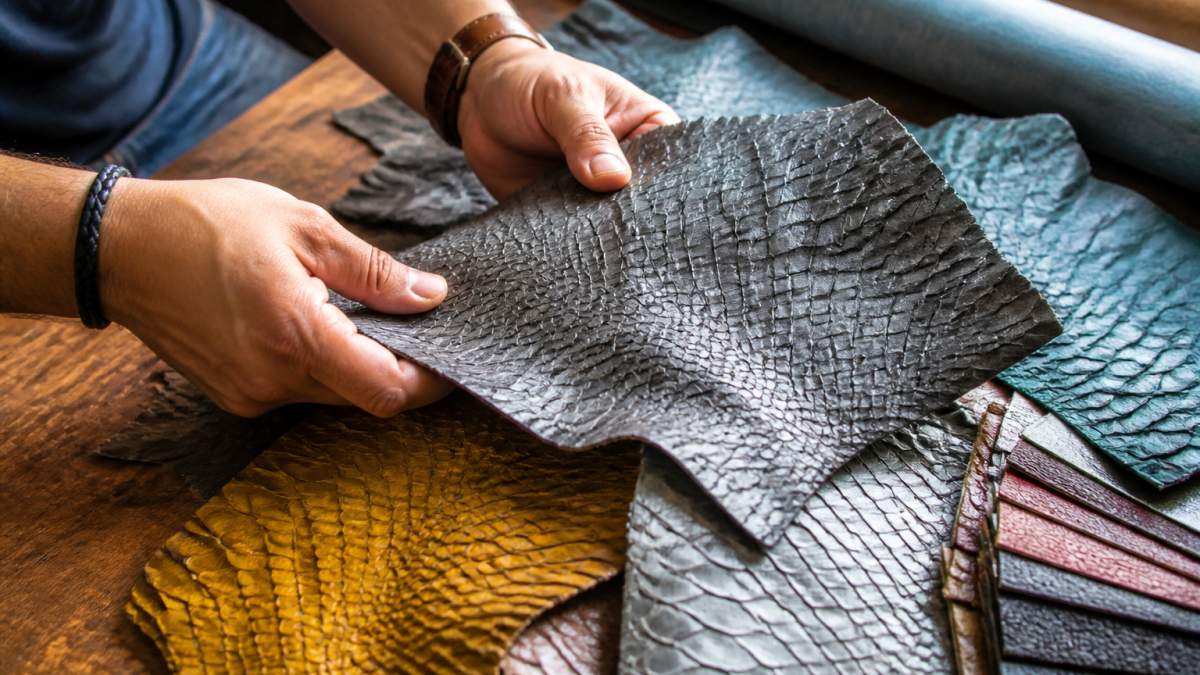
Trade shows focused on leather, fashion, and accessories are primary sourcing venues.
Online directories and industry associations provide supplier lists, though vetting is essential.
Minimum order quantities vary dramatically by supplier and material. Reptile leather suppliers often require 10-50 hides per order, a significant upfront investment.
When evaluating suppliers, ask directly about:
- Sample availability and pricing
- Minimum order quantities for production orders
- Lead times from order placement to delivery
- Pricing tiers based on order volume
- Return or quality guarantee policies
- Available documentation (origin, tanning method, species verification)
Ethical Exotic Leather Sourcing: What You Need to Know
Ethical sourcing in exotic leather means verifying that hides come from legal, sustainable sources and that animals were treated humanely throughout the supply chain.
The first distinction is between wild-caught and farmed exotic leather.
Wild-caught exotic leather exists in legal, regulated trade channels, particularly for python and some crocodile species, managed through harvest quotas designed to prevent population collapse.
Responsible sourcing practices include:
- Verifying that suppliers source from farms or legal harvest programs with documented quotas
- Confirming that hides come from established, regulated operations rather than opportunistic or illegal collectors
- Reviewing farm conditions or harvest practices where possible
- Prioritizing suppliers who engage with local communities and contribute to regional conservation efforts
- Choosing farmed sources over wild-caught when quality and availability allow
Fish leather sourcing often aligns naturally with ethical practices because many fish leathers are byproducts of food industries. Using skins that would otherwise be discarded reduces waste and improves resource efficiency.
CITES, Legal Documentation, and Exotic Leather Traceability
CITES operates through three appendices. Appendix I species face near-total trade prohibitions except in specific circumstances. Appendix II species can be traded legally with proper permits and documentation.
In the United States, the U.S. Fish and Wildlife Service (USFWS) administers CITES implementation (CITES).
Legal documentation for exotic leather includes:
- CITES permits for the exporting country and importing country
- Species identification certificates confirming the type of animal
- Origin documentation showing where the hide was sourced (farm or wild-caught location)
- Tanning and processing records
- Invoices and shipping documentation
- Proof of legal harvest or farm origin
Traceability means following a hide from animal to finished product. Reputable suppliers maintain documentation at each step: harvest or farm records, tanning facility records, and shipment records.
Many suppliers now use digital traceability systems that assign unique identifiers to hides, letting buyers verify origin through blockchain or centralized databases.
Supplier Due Diligence: Verification Checklist for Small Businesses
Vetting suppliers before placing orders protects your business from regulatory violations, product seizures, and reputational damage. Use this checklist to evaluate suppliers systematically.
Documentation and Compliance:
- Supplier provides written confirmation of species (Latin name and common name)
- Origin documentation clearly states country and region of source
- Supplier confirms whether leather is farmed or wild-caught
- CITES permits are available for review (for Appendix I and II species)
- Tanning method and facility location are documented
- Supplier has import/export licenses appropriate to their jurisdiction
Supplier Reputation and History:
- Supplier has been in business for at least 5 years
- References from other buyers are available and responsive
- Supplier is registered with industry associations or trade groups
- No public records of regulatory violations or legal disputes
- Supplier maintains consistent pricing and quality standards
Quality and Consistency:
- Sample hides match specifications provided
- Hide condition (defects, thickness, color) is consistent with descriptions
- Tanning quality is uniform across samples
- Supplier can provide hides in consistent sizes and colors for repeat orders
Communication and Responsiveness:
- Supplier responds to inquiries within 48 hours
- Supplier is transparent about lead times and minimum orders
- Supplier provides clear terms and conditions in writing
- Supplier offers technical support or guidance on material use
Ethical Practices:
- Supplier can describe farm conditions or harvest practices
- Supplier engages with conservation organizations or sustainability initiatives
- Supplier's sourcing practices align with your brand values
Red flags that warrant caution:
- Suppliers who refuse to provide documentation of origin or species
- Unusually low prices that suggest corner-cutting or illegal sourcing
- Lack of consistent quality or inability to fulfill repeat orders
- Unwillingness to provide references or supplier history
- Vague or evasive answers about sourcing practices
Cost Breakdowns, Budgeting, and Realistic Pricing for Exotic Leather
Exotic leather pricing varies dramatically by species, quality, sourcing method, and market conditions. Understanding cost structure helps you budget accurately and evaluate supplier quotes.
Fish Leather Pricing: Fish leather is the most accessible entry point for small businesses. At Fiskur Leather, Salmon leather is $28.00 per piece (average 0.8 square feet), and Tilapia leather is $12.00 per piece. Lunker Leather, our artisanal hand-tanned option using oak gallnut extract and natural dyes, is $20.00.

Reptile Leather Pricing: Crocodile and alligator leather commands significantly higher prices than fish leather. Wholesale crocodile typically ranges from $40-80 per hide depending on size and quality. Alligator is generally $25-50 per hide. Python ranges from $30-60 per hide.
Cost Factors:
- Species: Reptile leather costs more than fish leather; farmed sources are generally cheaper than wild-caught
- Size: Larger, higher-quality hides cost more per square foot
- Tanning method: Chrome-free or specialized tanning processes add cost
- Origin: Hides from established farms or regulated programs cost more than questionable sources (though the latter carry legal risk)
- Minimum order quantities: Larger orders typically reduce per-unit cost
- Freshness: Recently tanned hides may cost more than aged stock
Budgeting for Small Orders: If you're designing with fish leather, budget $12-28 per piece plus cutting waste (typically 15-25% depending on design).
For reptile leather experimentation, start with samples rather than full production orders.
Conclusion
Exotic leather sourcing for small business is achievable when you understand the regulatory landscape, verify supplier credibility, and align material choices with your production needs. Start with fish leather if you're new to exotic materials, it offers lower costs, simpler documentation, and exceptional quality. At Fiskur Leather, we provide ethically sourced fish leather pieces starting at $12.00, plus custom tanning classes and premium imported options for designers ready to scale. Our handcrafted approach and sustainable sourcing practices ensure your materials reflect your brand values. Shop our collection and explore how exotic leather can differentiate your designs.
Frequently Asked Questions
Where can a small business source high-quality exotic leather?
Small businesses can source exotic leather from specialized suppliers, tanneries, and distributors that work with small batch orders. Verify suppliers by requesting CITES documentation, certificates of origin, and references. Fish leather offers an ethical alternative available in smaller quantities, Fiskur Leather, for example, offers Lunker Leather and premium salmon leather starting at $20 per piece, with custom sourcing available. Always ask suppliers about their minimum order quantities and whether they accommodate sample orders before committing to larger purchases.
How can a small business verify the origin of exotic leather?
Request complete documentation from your supplier: CITES permits (if applicable), tannery certificates, chain of custody records, and species identification documentation. Ask specifically where hides originate, wild-caught, ranch-raised, or farmed. Legitimate suppliers provide this information without hesitation. For fish leather, verify the species and tanning method; Nanai salmon leather, for instance, uses a 100% chrome-free tanning process and comes with clear sourcing information. Cross-reference supplier claims with industry standards and regulatory databases when possible.
What documents should suppliers provide for exotic leather?
Reputable exotic leather suppliers should provide: CITES permits or exemption certificates (for regulated species), tannery certification, species identification, origin documentation, chain of custody records, and tanning method details. For fish leather, request information about water source, tanning chemicals used, and any sustainability certifications. Keep all documentation organized and accessible for your own records and customer inquiries. This documentation protects both your business and demonstrates your commitment to ethical sourcing.
Is fish leather a practical alternative to traditional exotic hides?
Yes. Fish leather offers durability comparable to traditional exotic hides while presenting fewer regulatory and ethical complications. Salmon leather is thin, flexible, and strong; tilapia leather is equally durable though less soft. Fish leather works well for wallets, bags, jewelry components, and custom accessories. Premium options like Nanai salmon leather include waterproof coatings and superior color fastness. Fish leather typically requires smaller minimum orders than crocodile or python, making it ideal for small businesses and artisans testing new designs before scaling production.
What should small businesses ask an exotic leather supplier?
Ask: (1) What is the minimum order quantity and do you offer samples? (2) Can you provide CITES documentation or proof of legal sourcing? (3) What is the species, origin, and tanning method? (4) What is the price per unit, and are volume discounts available? (5) What is the lead time for orders? (6) Do you provide chain of custody documentation? (7) What is your animal welfare and sustainability approach? (8) Can you accommodate custom specifications or colors? These questions help you assess supplier credibility and ensure alignment with your business values.
Can exotic leather be sourced ethically?
Ethical exotic leather sourcing is possible when you work with suppliers who prioritize animal welfare, support local communities, maintain legal compliance, and practice sustainable harvesting. Look for ranch-raised or farmed hides rather than wild-caught when available. Verify CITES compliance and conservation practices. Fish leather represents one of the most ethical exotic options because farmed fish reduce pressure on wild populations. Fiskur Leather, for example, sources salmon and local fish species using sustainable tanning methods, demonstrating that ethical exotic leather sourcing is achievable for small businesses committed to responsible practices.
How do you choose exotic leather for a custom project?
Consider: (1) Project requirements, durability, flexibility, water resistance, texture; (2) Species characteristics, fish leather suits flexible items like wallets and bags; (3) Color and finish options available; (4) Minimum order quantities and sample availability; (5) Budget constraints; (6) Timeline and lead times; (7) Ethical and legal sourcing standards. Test samples before committing to full orders. For custom work, communicate specific needs to suppliers early. Fiskur Leather offers custom-made services and can provide samples in various finishes and colors, helping you make informed decisions before production begins.
Leave a comment